
 Stress isn’t rare anymore. Neither is anxiety. And burnout? For many Australians, it feels baked into modern life.
So it makes sense that people are reaching for support wherever they can find it. Not just in clinics, but in devices — rings, watches, apps that promise insight into our emotional world.
Mental health tech is expanding quickly. Wearables like the Oura Ring and Whoop sit alongside AI-driven therapy apps offering support at any hour of the day.
Mood-Tracking Wearables: Insight or Interference?
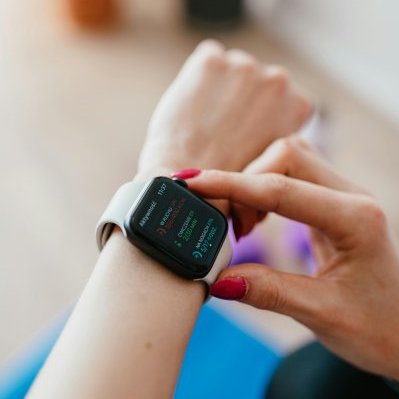
Wearables began as performance tools. Athletes used them to fine-tune recovery and training loads. Now they’ve entered everyday life, marketed as windows into stress, resilience, and emotional wellbeing.
More than 40% of Australian adults use a wearable device. Among those aged 25 to 39, that figure climbs past 55% (Roy Morgan Research, 2023). These devices monitor heart rate variability, sleep depth, temperature changes, and recovery trends. Then they translate that data into messages:
- “You may feel irritable today — your sleep was disrupted.”
- “Your HRV is lower than usual — consider taking a break.”
For some people, that feedback is grounding. It highlights patterns. It validates what the body has been signalling quietly all along. For others, it becomes another metric to manage. Another number to optimise. Instead of checking in internally, they wait for a notification to tell them how they’re doing.
There’s something powerful about data. But there’s also something powerful about intuition. And the balance between the two matters.
AI Therapy Apps: Support Without the Waiting Room
 AI-powered mental health apps like Woebot, Wysa and MindDoc offer structured psychological tools through chat-based conversations. Many are built on cognitive behavioural therapy principles — prompting reflection, reframing thoughts, guiding breathing exercises.
They’re not meant to replace therapists. The goal is accessibility. Immediate support. A place to land when emotions spike outside office hours.
And there is evidence suggesting benefit. A 2020 peer-reviewed Stanford study found Woebot users experienced reductions in anxiety and depression symptoms within two weeks (Darcy et al., JMIR Mental Health).
In a country where over 3 million Australians experience anxiety each year (Beyond Blue, 2022), access matters. Still, something important remains unanswered. Can an algorithm truly grasp grief? Complex trauma? The subtle shifts in tone that signal something deeper?
For some, these apps feel surprisingly supportive. For others, they feel scripted — helpful, but limited. When mental health challenges are layered or long-standing, human presence carries a depth technology cannot yet replicate.
The Data Dilemma: Where Does Your Emotional Data Go?
This is the part that rarely makes the marketing material. Many mental health apps are not covered by Australia’s Privacy Act 1988 unless they’re provided by registered health services. That means sensitive emotional data may not be protected in the way users assume. A 2023 UNSW study found that 79% of popular mental health apps shared user data with third parties, often without clear, fully informed consent.
Mood logs. Journal entries. Stress scores. These are not trivial pieces of information. They reflect some of the most vulnerable aspects of a person’s life. As emotional tracking becomes normalised, regulation hasn’t always kept pace. Transparency and accountability need to grow alongside innovation — not trail behind it.
A System Under Pressure
There’s another layer to this conversation. Australia is facing a shortage of mental health professionals. Waitlists stretch for months. Rural communities face geographic barriers. Cost remains a hurdle for many families.
In that context, digital tools can help bridge gaps. They offer immediacy. They lower the barrier to entry. For younger generations especially, opening an app can feel less intimidating than booking a first appointment.
Hybrid care models are emerging — therapy supported by digital check-ins between sessions. In many cases, that combination works well. But reliance carries risks too.
When tracking becomes constant, reflection can turn into rumination. When support is automated, connection can feel diluted. And when deeper causes of distress — burnout culture, social isolation, unresolved trauma — remain unaddressed, technology can only go so far.
Tool or Crutch?
Mental health technology isn’t inherently a solution or a problem. It’s a tool. And tools are only as helpful as the context in which they’re used. Wearables can reveal patterns. AI apps can prompt reflection. Digital support can create breathing room between therapy sessions.
But they cannot replace human relationships. They cannot substitute meaningful rest. They cannot do the deeper work for us. Technology is moving quickly. Faster than regulation. Faster than cultural understanding. That makes discernment essential.
Notice how the tool makes you feel. Calmer? Or more fixated? Supported? Or monitored? Use the data. But don’t surrender your intuition.
We’d love to hear your experience. Have these tools helped you feel more in control — or more overwhelmed?
CONTACT US